Soundscene®
A physical study in
machine listening.
We photograph
what we see.
What about what
we hear?
Wind. A passing bus. Someone laughing. A place has a sound, but the usual souvenir leaves it behind.
Soundscene explores how machine listening turns that atmosphere into an image. Sound Polaroid gives the question a physical form: an object that listens, interprets and prints.
- Project
- Final major project
- Discipline
- Human-computer interaction
- My role
- Concept, interaction & prototyping
- Output
- A listening-to-print prototype
A place.
Ambient sound becomes the starting point. Traffic, voices, wind and footsteps: the parts of a place a photograph leaves out.
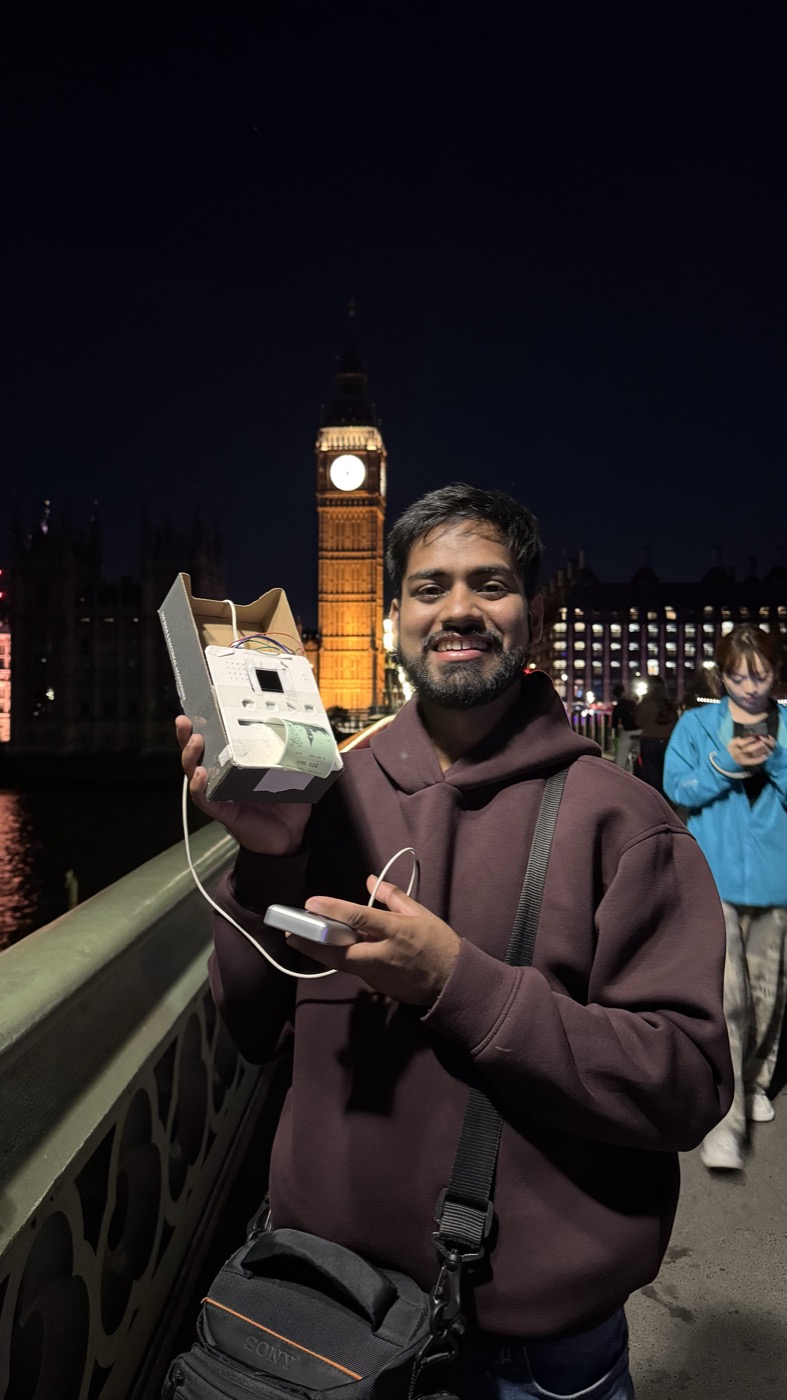
Press play.
Keep listening.
One button, ten seconds, one interpreted souvenir.
Behind the souvenir.
01A camera that listens
+
A place is not only remembered through images. It is remembered through voices, birds, traffic, footsteps, wind, water, echo and silence.
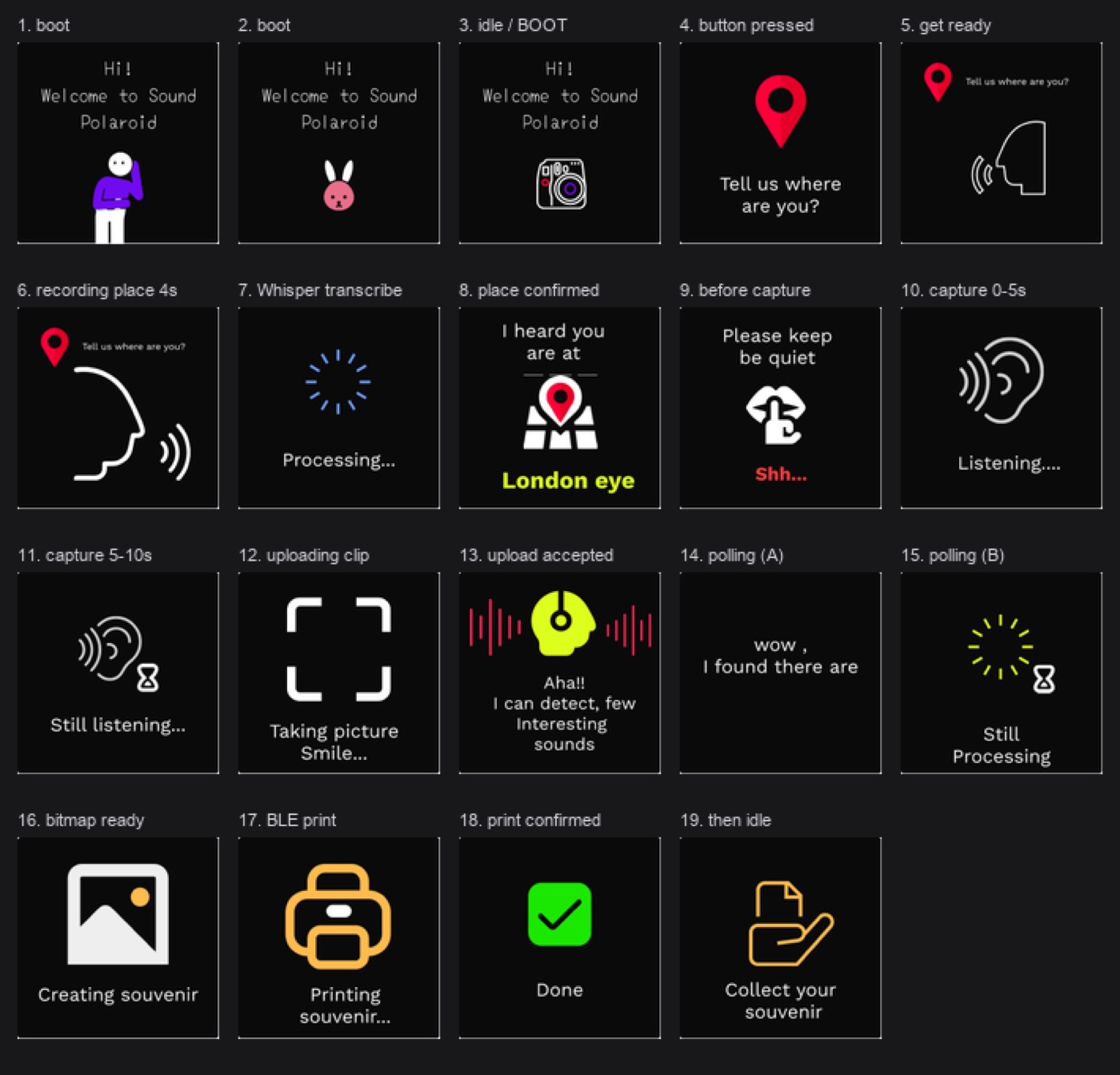
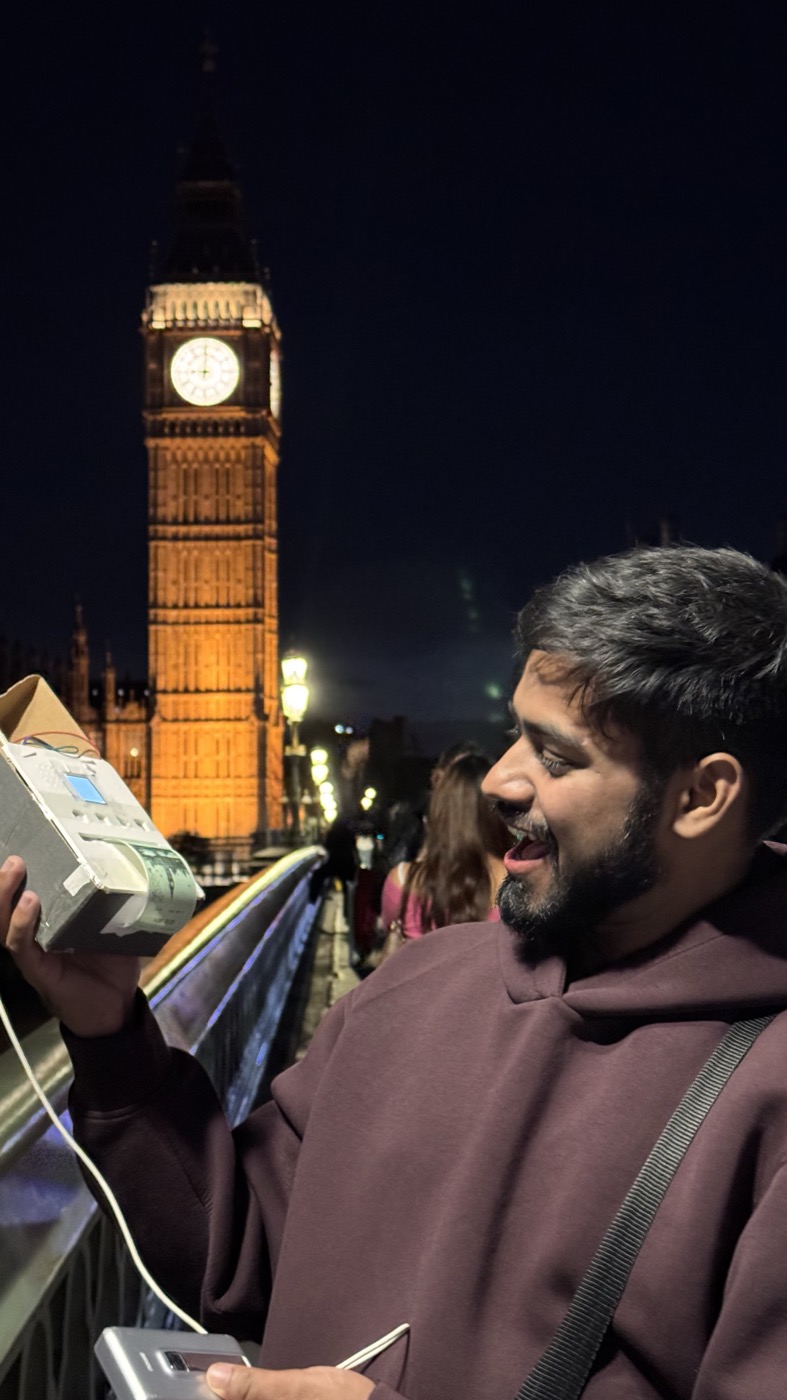
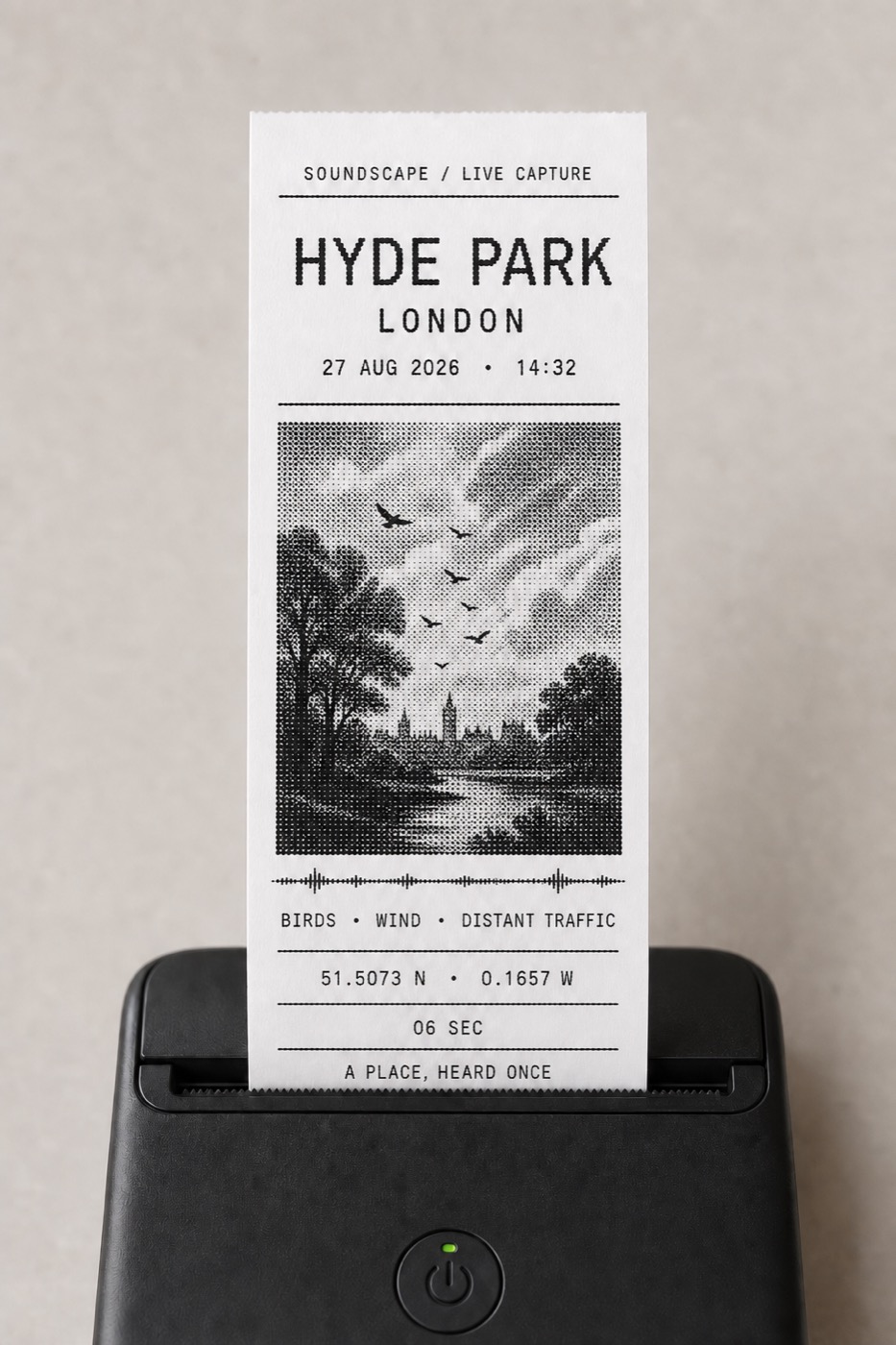
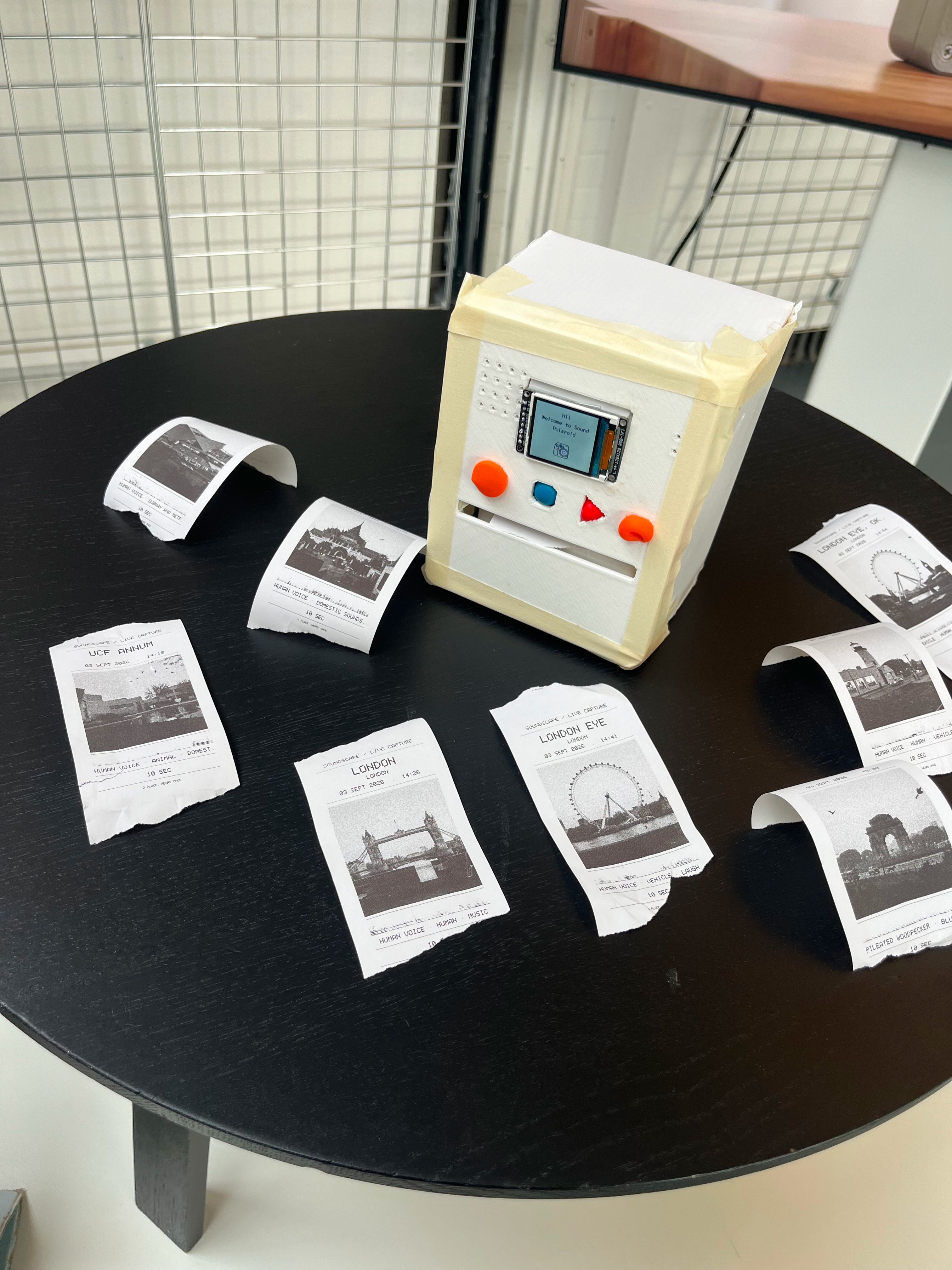
Sound Polaroid is a handheld device that photographs a place by listening to it. Press one button: it records ten seconds of ambient sound, works out what it thinks it heard, turns those detections into a readable prompt, generates an image from that prompt, and prints the result on thermal paper.
It is the physical form of Soundscene, my final major project — which asks what happens when a machine listens to a place, simplifies it, interprets it, and makes something visual from that listening.
02The HCI question behind the object
+
Sound Polaroid is the physical part of Soundscene, my final major project. The research question is not simply whether sound can generate an image. It is how a person understands, questions and relates to the interpretation a machine makes of a place.
The device makes that translation tangible. Sound becomes labels, labels become a prompt, and the prompt becomes a souvenir. Each step introduces choices and loses information. Showing those steps gives the person something to inspect rather than presenting the final picture as a faithful record.
03The problem with the default souvenir
+
The usual way to keep a moment is to raise a phone, frame it, retake it and check the screen — and the result looks like everyone else's photograph of the same spot.
I wanted a capture device that records atmosphere rather than appearance. And I wanted to do it without quietly shipping people's private ambient audio to a black box that hands back a polished picture with no explanation.
04The translation chain
+
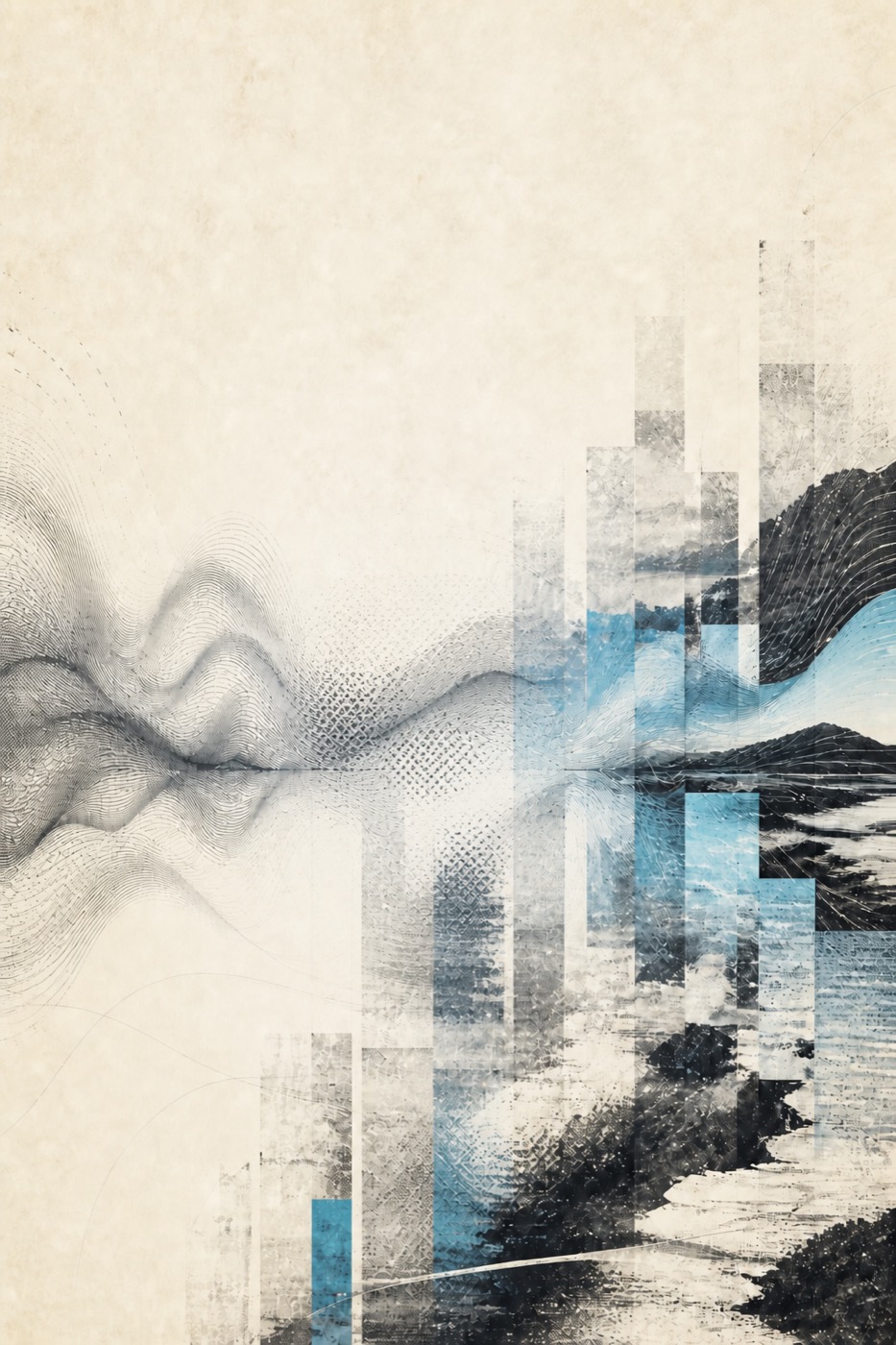
Place → ambient sound → detected labels → authored visual mapping → prompt → generated image → print.
Every stage changes the original moment. Most systems hide that; this one shows it. A dense soundscape collapses into three words — traffic, speech, birds — and that collapse is the interesting part of the project, not the embarrassing part.